
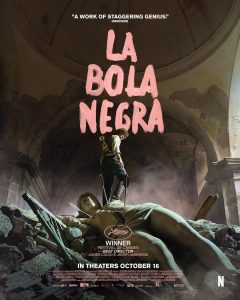
The new Spanish film LA BOLA NEGRA (The Black Ball) is a film of great scale, emotion, and length. It’s 159 minutes long, tells three stories across three time periods (1932, 1937, and 2017), and draws on the unfinished work of the same name by Federico Garcia Lorca, the famed Spanish playwright and poet of the early 20th Century. Lorca was assassinated at the beginning of the Spanish Civil War in 1936 due to his radicalism and homosexuality. That story, along with pieces from his lost play, blends with the screenwriting of Javier Calvo, Javier Ambrossi, and Alberto Conejero to make one of the more profound films in some time. In fact, that plot is a lot for an introductory paragraph, let alone an expensive, expansive melodrama that demands an audience keep everything clear for its densely packed two-hour-and-39-minute run time. LA BOLA NEGRA is epic in ambition, albeit not entirely successful in cogent storytelling. Still, it’s a very moving film, well-acted, expertly produced, and full of brio as it presents the complexities of being a gay man in its three different time periods.
Ambrossi and Calvo co-directed this film, too, and their passion for the project shows in every moment. From the sweeping cinematography to the action sequences to the often shocking violence, this is a film you feel as much as you watch. The film even delivers a couple of juicy scenes for supporting actresses Penélope Cruz and Glenn Close, with many pundits pegging Cruz for a possible Oscar nomination. (She’s great as a wartime chanteuse, entertaining the Spanish troops during a lull in the fighting, and you wish she were in the film even more.)
The 1932 story follows Carlos (Milo Quifes), a young man from a wealthy family, who is denied membership in an exclusive social club after the committee blackballs his nomination because of rumors about his alleged homosexuality. The 1937 story centers on Sebastian (Guitarricadelafuente), a young, closeted trumpet player who’s forced to join the Nationalist forces to survive after his small town is massacred by the army. Finally, in 2017, Alberto (Carlos Gonzalez) is a failed playwright who now works as a historian while balancing pickups at the local gay bar and put-downs from his vicious mother.
All three stories comment on one another and inform the plotting, especially when Alberto finds a hidden text by Lorca left to him in a will and how that secret document connects to the other two. The complicated overlap doesn’t pay off entirely until the final reel, and even then, the narrative’s earlier complexities keep the puzzle somewhat elusive. LA BOLA NEGRA mixes in scenes of harsh wartime reality and episodes of pure fantasy, with its three-story timeline jumping back and forth. Non-traditional editing adds even more complexity, and some scenes run too long, begging for judicious cuts and far less melodramatic scoring. At times, the film gilds the lily, keeping it from being as tight and disciplined as it probably should be.
Still, it’s hard to argue with a through-line that shows how discrimination against homosexuals pervades, whether through victimization by the judgmental bourgeoisie, a strict military, or an embittered parent. The players all acquit themselves well, relying mostly on nuanced reactions, since much of what the main queer characters wanted to say could not be spoken in their circumstances. The narrative here becomes a triptych about men hoping for love and acceptance, rarely finding the chance to embrace either, and dealing with the fallout of both. Even so, the characters in LA BOLA NEGRA manage to find fragments of what they’re after, clinging to such passionate but fleeting moments for as long as they can, even if they are mere seconds.
LA BOLA NEGRA reminds us of just how fragile life and love are, and that, no matter the odds or the context, such goals remain the truest victories anyone, in any time period, could fight for